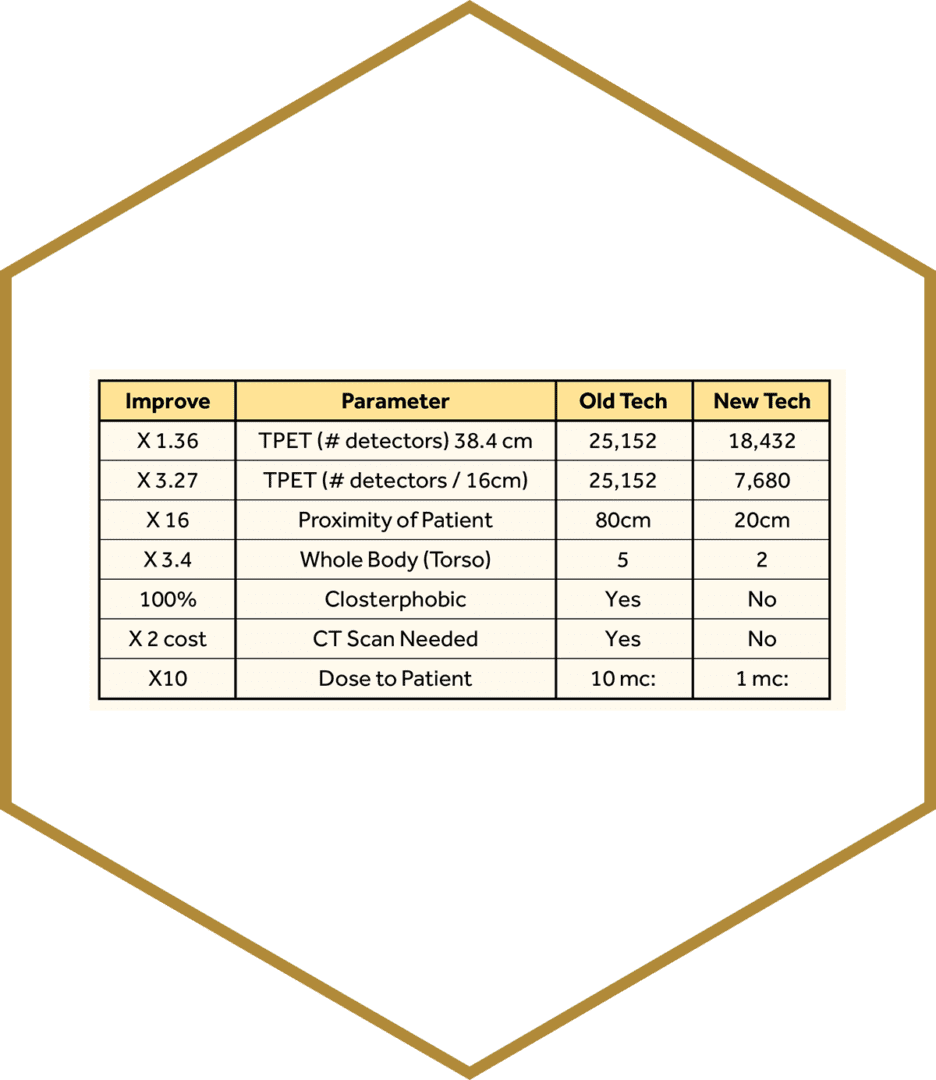
Revolutionizing Cancer Diagnostics
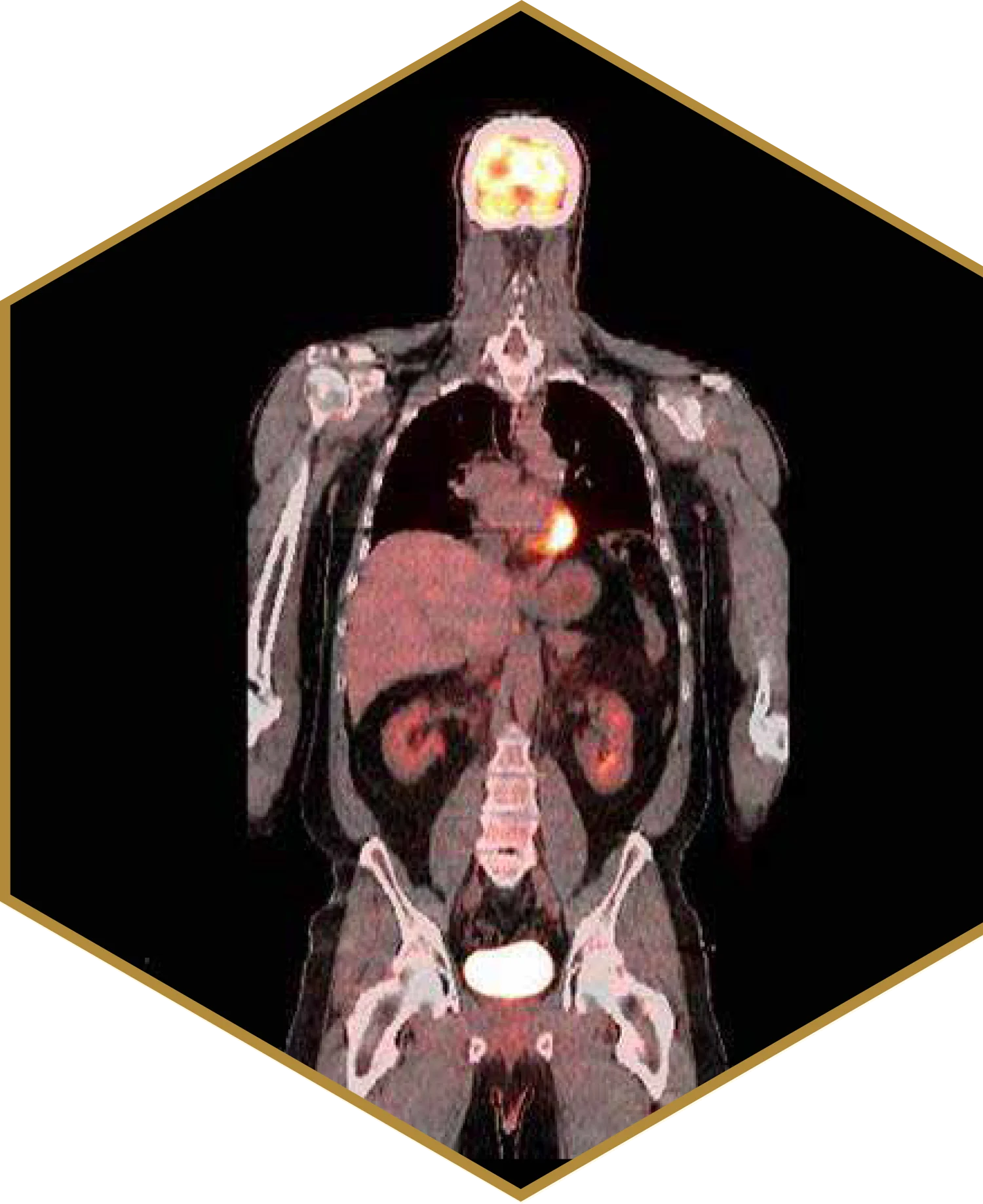
Our TPET technology represents a significant advancement in the field of cancer diagnostics. Unlike conventional imaging techniques, TPET allows for the detection of cancer at a much earlier stage, often before physical symptoms manifest. This capability not only enhances patient outcomes but also contributes to a broader understanding of cancer progression.

Setting New Standards in Screening
The reduced radiation exposure associated with TPET positions it as a viable option for regulatory approval worldwide. By meeting the stringent requirements of health authorities, our technology is poised to change the landscape of cancer screening. To discover more about how our TPET technology can impact cancer detection, feel free to contact us.
BASIC PRINCIPLE OF TPET
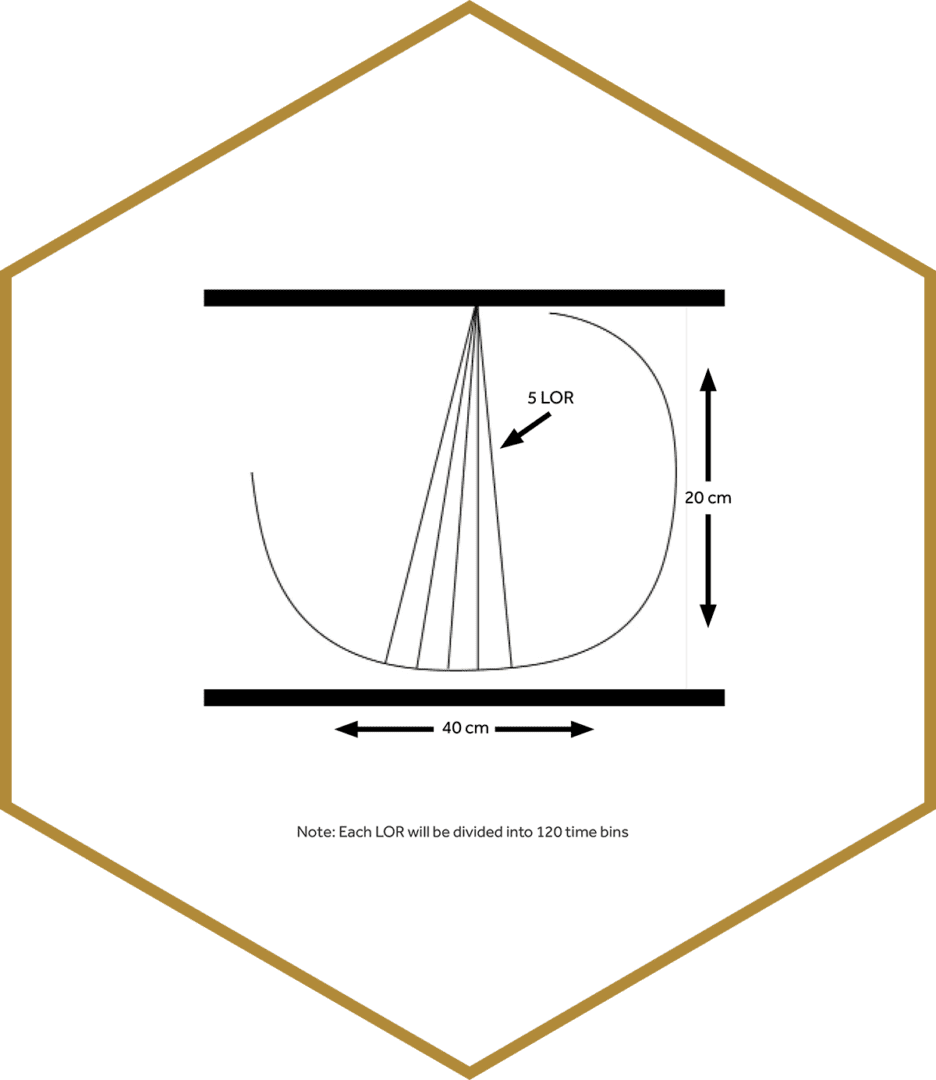
TIME RESOLVED POSITION EMISSION TOMOGRAPHY
The basic principle: a line of response in 2D is established just like in the current technology.
The location of the position event along the line of response is determined by measuring the arrival time difference of the two gamma rays.
The time measurement identifies the exact point of the cancer.
The basic benefits:
- Elimination of expensive and time-consuming image reconstruction.
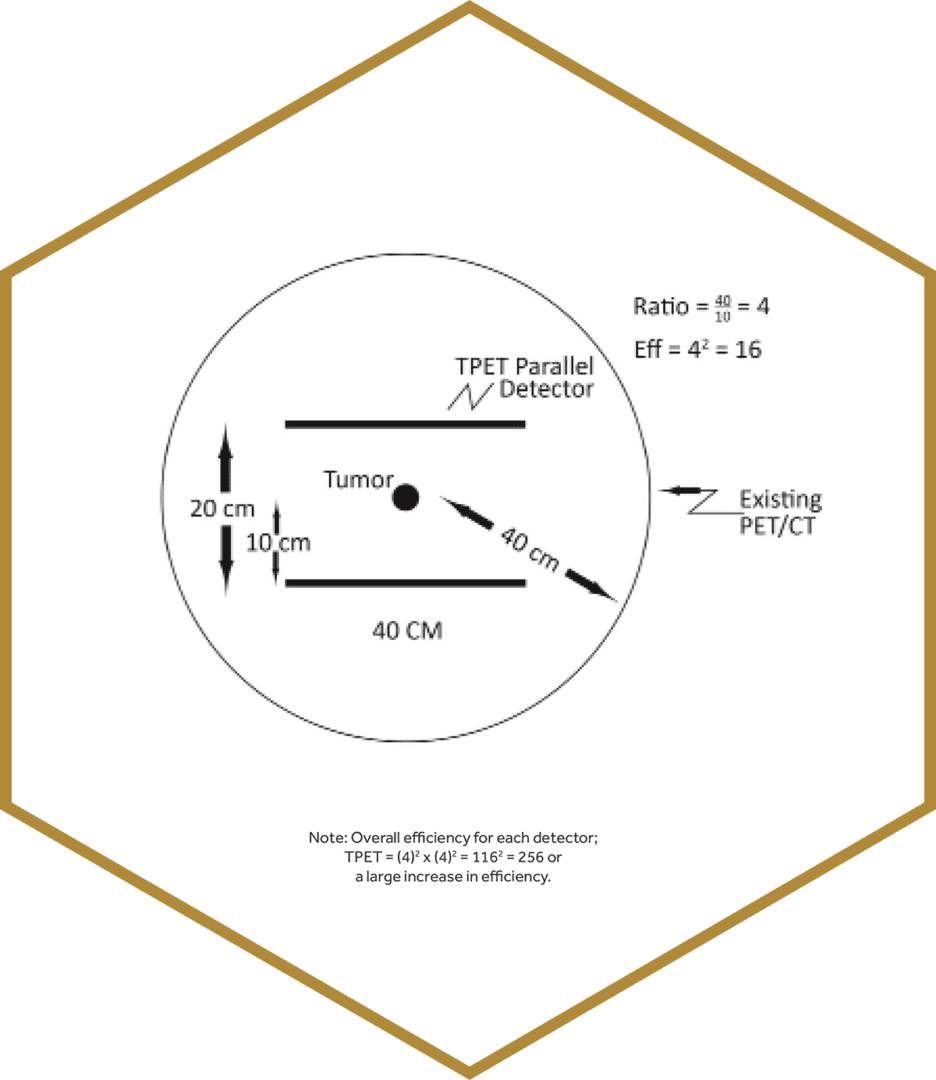
- The detectors are in two opposing planer arrays allowing for the imaging to be performed at a closer proximity to the patient which increases efficiency.
- The gamma-ray attenuation is more uniform making it easier for attenuation correction. The beauty is it is lower in cost compared to the old technology and reduces radiation exposure.
INFORMATION CONTENT FOR EACH DETECTED RAY
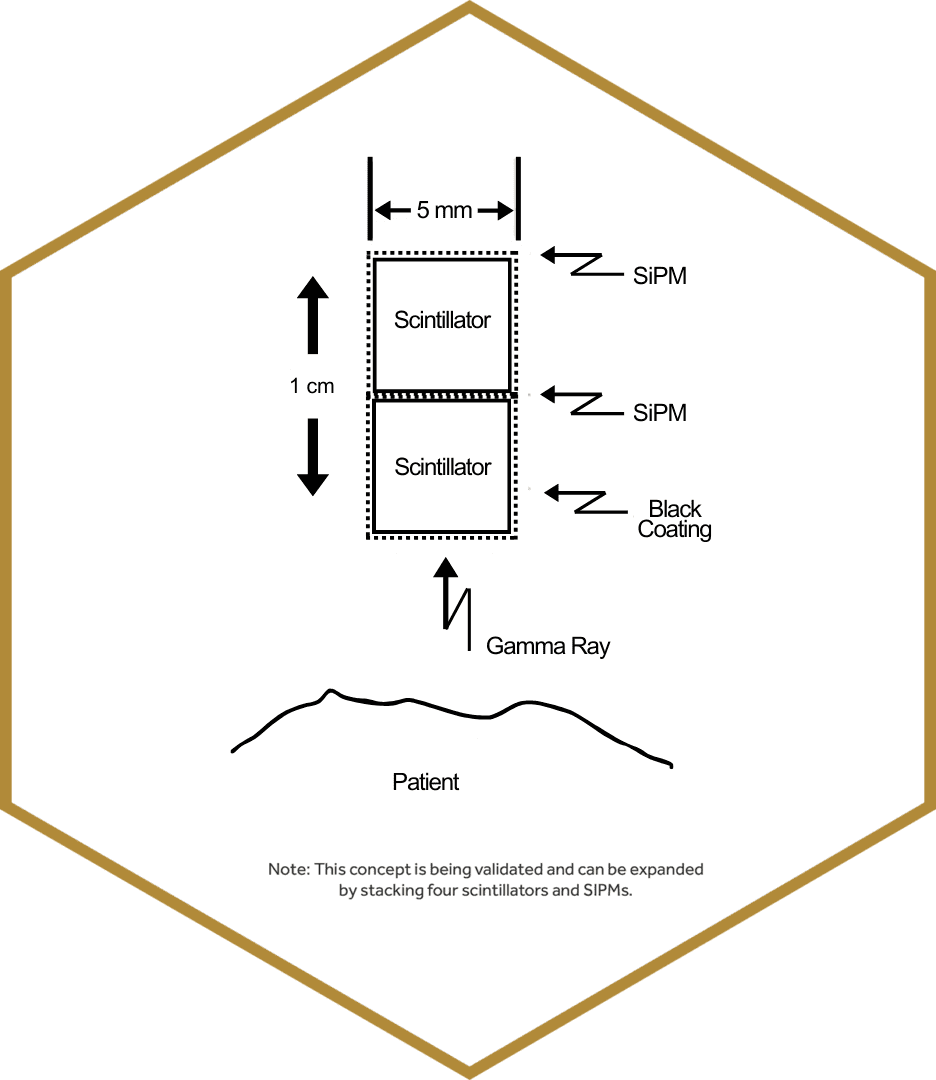
TPET PIXEL CONCEPT
EFFICIENCY
SPATIAL RESOLUTION
SCATTER ISSUES
In the cases of old technology and 511 KEV gamma rays can be scattered and two significant actions occur. First, the scatter gamma ray causes an incorrect line of response. The second and more complicated action, the scattered event causes the incorrect intersection of many more lines of response. The new technology causes only one action and that is registering one incorrect event, which is much less detrimental to the overall image.
RANDOM COUNTS
In the old technology, two random events within the time window allocated caused a similar situation to that of the scatter issues. There are, in this case, two crossings of the lie of response which forces the reconstruction algorithm to require many more events to clarify where the real positrons are located. This represents a second source of inefficiency in the PET system. TPET will not have these issues.
We began the analysis by concluding that the minimum inefficiency of the old technology is a factor of two compared with TPET. Considering scattering events and random events, it is now obvious that the inefficiency will be much greater.
DEVELOPMENTS NEEDED
- SiPM with Single Photon Time Resolution less than 100 psec.
- SiPM with 3mm pixels divided by 4 elements with each element isolated with a fast amplifier all located on the silicon chip.
- Reasonable cost for 1,000 units/scanner
TPET